
Regular sleep is the simplest recovery habit
Säännöllinen uni means regular sleep, and in Finnish lifestyle guidance the regularity matters as much as the total hours. This page is about the routines around sleep, because those are the parts you can change tonight.
What this page asks of you: pick a wake time, hold it for a week, and keep the last hour before bed calm. Everything else is timing.
How much sleep adults actually need
Most adults function best somewhere between seven and nine hours, and the range reflects real individual variation. The number is less useful than the pattern: a steady seven hours usually beats an erratic average of eight.
An easier read of your own sleep need often comes from a steady morning, not from a longer night.
If you wake at a consistent time for a week, your natural sleep need becomes easier to read. Chasing a perfect figure often adds pressure without improving rest, and pressure is the opposite of what this page is for.
Why the wake time matters more than the bedtime — you cannot force yourself to fall asleep, but you can control when you get up.
Why the wake time matters more than the bedtime
Anchors the rhythm
A consistent wake time sets the daily rhythm and gradually pulls the bedtime earlier on its own.
Survives busy weeks
Advice that focuses only on bedtime tends to fail when work runs late. The morning is easier to defend.
The evening follows
Set the morning first, and the evening arrives with less effort. Nothing here needs to be forced.
Evening meals and the jälkiruoka habit
Heavy late dinners sit in the stomach for hours and can fragment sleep. Finnish meal-planning advice often suggests keeping evening meals lighter and moving dessert earlier in the day as a snack. The logic is practical rather than restrictive: an easier final meal usually means an easier morning. If you eat late because of work, shifting the main meal to lunch is often the simplest fix.
What moves earlier, in practice
- The main hot meal shifts to lunch
- Dessert moves to an afternoon snack
- Evening plates get smaller and simpler
- Coffee lands before late afternoon
What to do with the last hour
The hour before bed sets the tone for the night. Bright screens, intense work, and heavy conversation all keep the system switched on. Calmer alternatives are unglamorous: a shower, light reading, tidying for tomorrow, or simply going to bed when you are tired. The goal is not a perfect ritual. It is a signal that the active part of the day has finished.
A low lamp and a closed book do more for the last hour than a new routine ever will.
Alcohol, caffeine, and the quiet costs
Caffeine, later than you think
Caffeine late in the day makes it harder to fall asleep, and the effect is delayed enough to be easy to underestimate. Finnish evening culture often puts coffee later than sleep advice would suggest, so shifting the last cup earlier is one of the more reliable changes available.
Alcohol, short cut and early wake
Alcohol can shorten the time it takes to fall asleep, but it tends to cause waking in the early hours, which is why the night feels broken afterwards. Neither caffeine nor alcohol has to be eliminated. Timing them earlier is the part you control.
Winter light and sleep in Finland
The low-light season affects sleep in ways that are easy to miss. Dark mornings make it harder to get up, and limited daylight weakens the signal that sets the daily rhythm. Getting outside during the brightest hours helps, even when the sky is grey. In the darkest weeks, this is the practical version of managing dark-season wellbeing rather than a separate problem.
Keep the same wake time, even in the dark weeks
Step outside during the brightest hours, grey sky included
Follow Finnish vitamin D guidance for the low-light months

Recovery is more than sleep — easy movement, time outdoors, and unhurried meals all support the same system.
Recovery is more than sleep
Sleep is the main recovery window, but it is not the only one. Easy movement, time outdoors, and unhurried meals all support the same system. Finnish recovery culture, including sauna and cold-water swimming, fits here as a way to reset after effort.
None of these replace sleep. They make the rest of the day more likely to end in one, which is why they sit on this page next to the bedtime habits rather than in a separate guide. If you want to go deeper on how the body handles everyday strain, the recovery and body care chapter is the next stop.
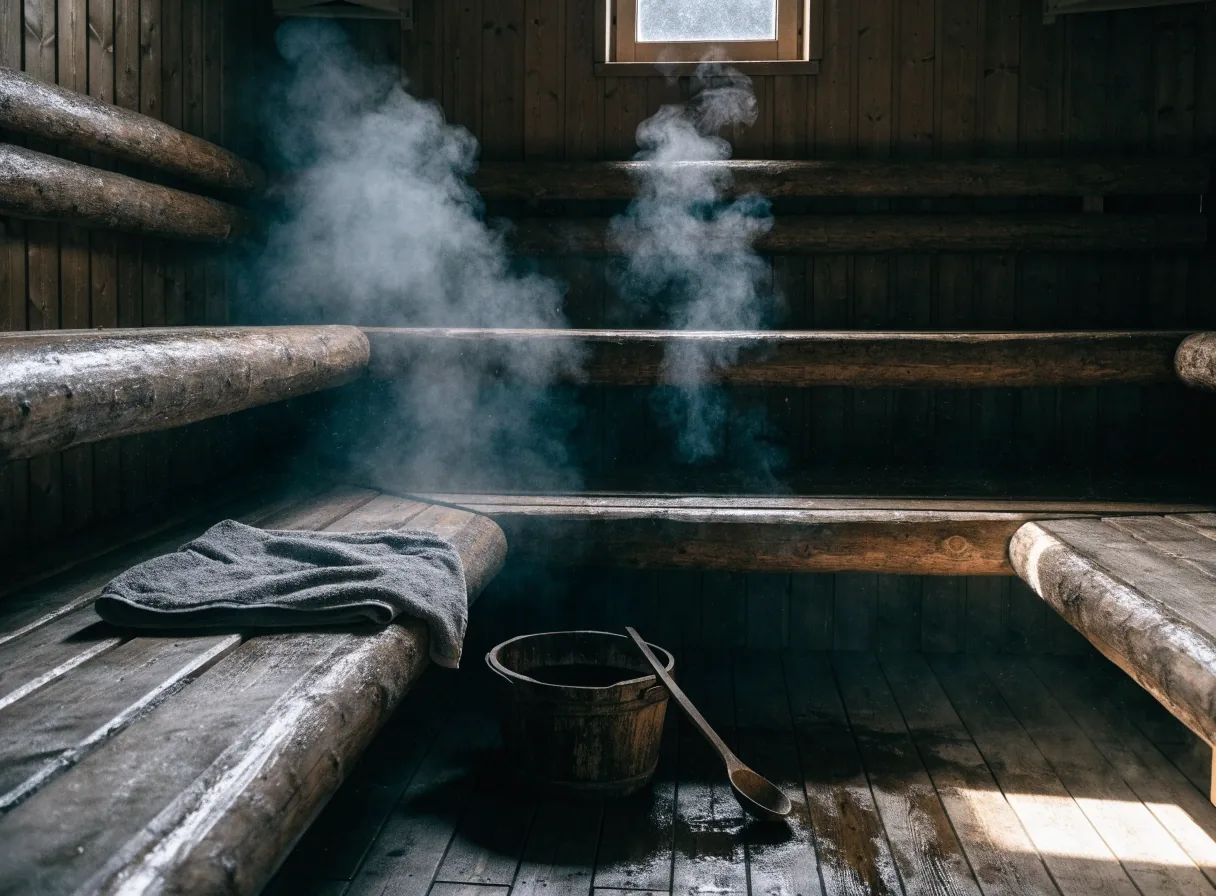
Sauna and cold-water swimming are recovery habits, not substitutes for a night's sleep.
When poor sleep needs professional attention
Short-term changes in sleep are normal, especially through seasonal shifts or stressful periods. Persistent difficulty falling or staying asleep over weeks is a different matter and deserves a conversation with a clinician rather than more routine tweaking. Snoring with daytime sleepiness is another signal worth checking.
We explain habits here; diagnosis belongs elsewhere. This page is an editorial resource, not a clinic, and nothing on it is medical advice or a treatment plan.
Questions readers send us most
How should sleep habits change in the dark Finnish winter?
Keep the same wake time, get outside during the brightest hours, keep evening meals lighter, and follow Finnish vitamin D guidance for the low-light months.
Does a long weekend lie-in fix a short week?
It helps less than it seems. A steady wake time across the week usually supports energy better than sleeping late on Saturday and Monday mornings, and it keeps the rhythm easier to read.
Where does the evening dessert habit fit in?
Many Finnish meal plans move jälkiruoka to an afternoon snack instead of a late evening plate. It is a timing change rather than a restriction, and it usually makes the last meal of the day lighter.
Should I track my sleep to see whether anything changed?
A simple note of your wake time, your last coffee, and how you felt in the morning is usually enough. Detailed tracking can add pressure of its own, and pressure works against rest.
Which routines should I change first if I only pick one?
Start with the wake time, then move your last coffee earlier in the day, then make the final meal lighter. Those three changes carry most of the difference, and they cost nothing to test for a week.
How do I ask the editors a question about this guide?
Write to the editors at Sleep & Nutrition Advice and tell us which chapter you are reading. We answer during office hours, Monday to Friday 9:00–18:00 and Saturday 10:00–14:00.
Start with one steady morning
You do not need a new bedtime ritual to improve recovery. Pick a wake time, hold it for a week, and let the evenings follow. The guides below go deeper on the parts that surround sleep.